

Why explore animals and nature with children?
Children can learn a great deal simply by paying attention to living things.
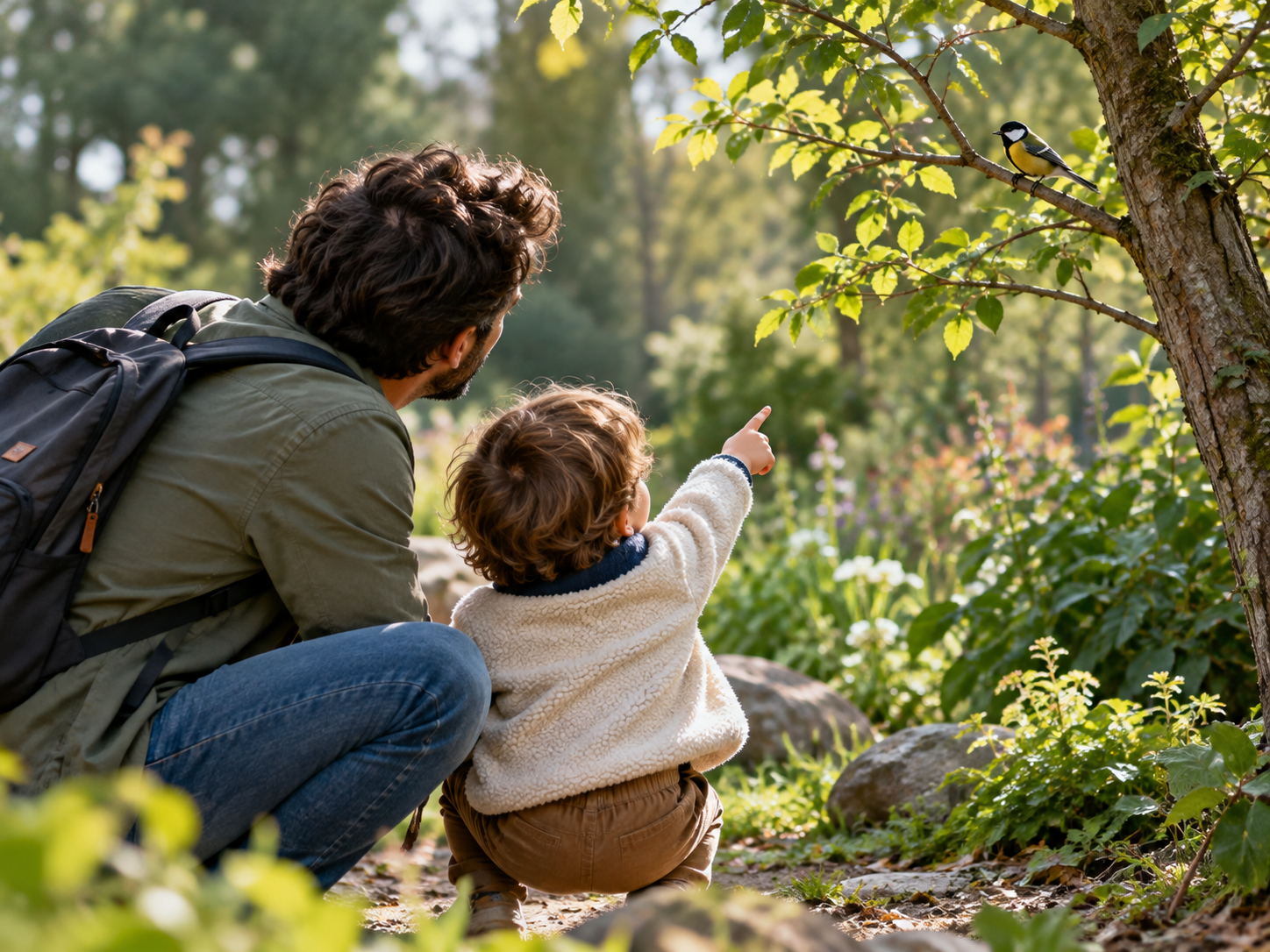
A bird on a balcony can raise questions about flight, food, migration, and behavior.
A tree can lead to conversations about seasons, growth, sunlight, water, and the animals that depend on it.
An ant colony can introduce cooperation, communication, insects, and ecosystems.
Research on early-childhood environmental education has found that nature-rich experiences can support children's cognitive, social-emotional, and environmental development. A systematic review of 66 studies also found that play-based and nature-rich approaches were particularly common among effective early-childhood programs.
The point isn't to turn every walk into a science lesson.
It's to give children opportunities to notice that the world around them is alive, changing, and connected.
Animals are full of questions
Children don't need to know the names of hundreds of species to start learning about animals.
One animal can be enough.
Take an elephant.
Where does it live?
What does it eat?
How does it communicate?
Why does it have such large ears?
How does it care for its young?
What happens to an elephant when its environment changes?
One animal can open the door to biology, geography, behavior, climate, conservation, and much more. The same thing happens with a bird, whale, frog, bee, dog, butterfly, or even an animal your child has never seen before.
Look at what animals do
Animals become particularly interesting when we stop looking only at what they are and start asking what they do.
Why does a bird migrate?
Why does a bear hibernate?
How does a bat find its way in the dark?
Why do wolves hunt together?
How does a spider catch food?
Why does a peacock have such a striking tail?
These questions introduce children to behavior, survival, communication, reproduction, adaptation, and relationships between animals and their environments. They also make wonderful starting points for further questions.
Nature is more than animals
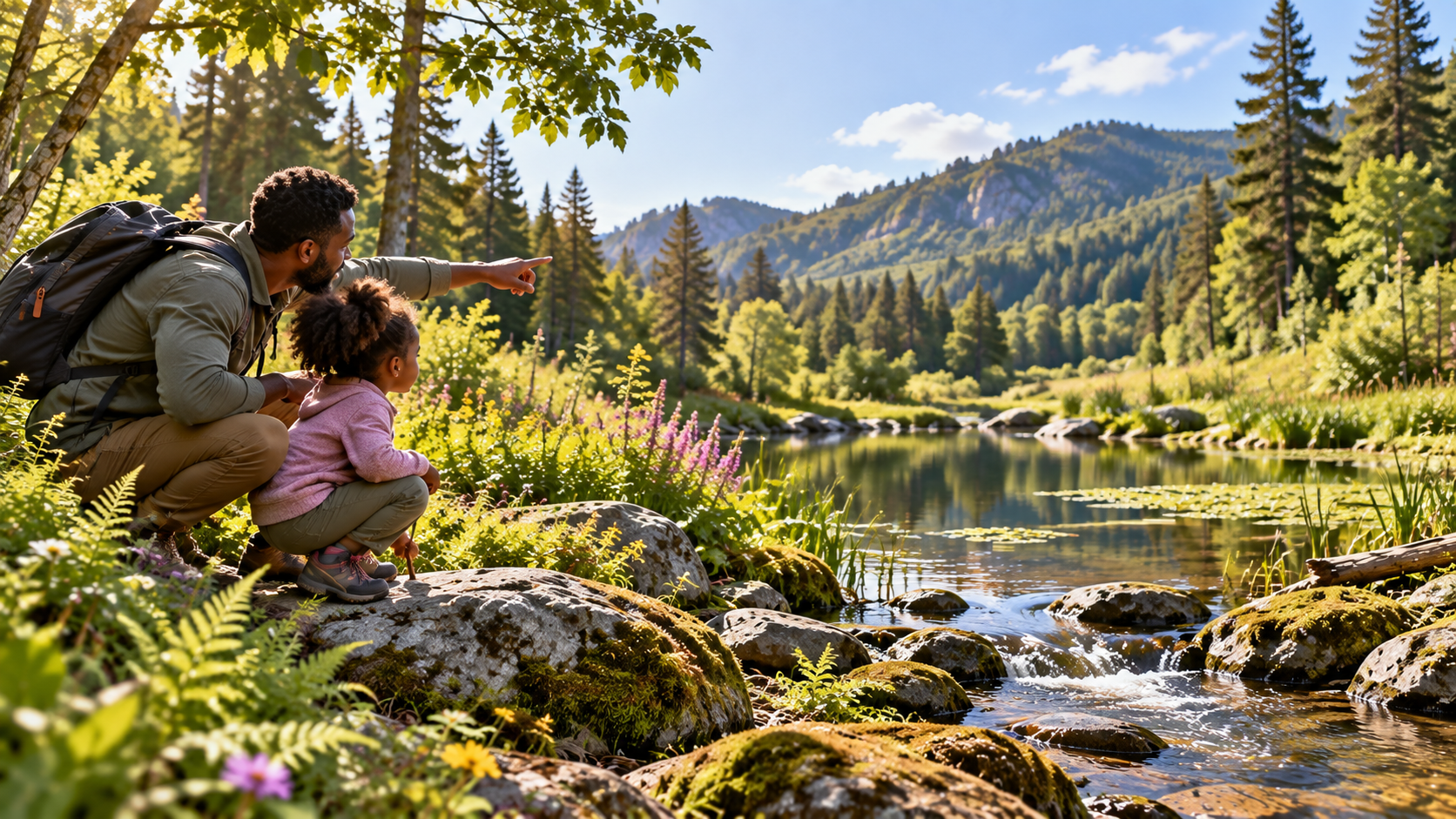
Children often notice animals first, but the natural world is much bigger.
There are plants growing everywhere.
There is water moving through rivers, clouds, rain, and oceans.
There are rocks, soil, forests, deserts, mountains, and wetlands.
There are microscopic organisms that children cannot see at all.
And all of these things interact.
A flower depends on pollinators.
A bird depends on food and a suitable habitat.
A forest depends on countless relationships between plants, animals, fungi, soil, water, and climate.
Understanding nature means gradually seeing these connections.
Explore a place, not just a species
A rainforest is not simply a place where interesting animals live.
It is a whole system.
The same is true of a coral reef, desert, pond, forest, grassland, or Arctic landscape.
What lives here?
Then: What does it need?
Then: What depends on it?
A question about one animal can become a question about an entire habitat. That's one of the most powerful things about exploring nature: the subject keeps expanding as you look more closely.
How do living things survive?
One of the most fascinating questions in nature is: How does a living thing survive in its environment?
A camel can survive in extremely dry environments.
A polar bear is adapted to a cold climate.
A cactus stores water.
A bird's body is adapted for flight.
Some insects look like leaves.
Some animals migrate when conditions change.
Some hibernate when food becomes scarce.
These aren't just interesting facts. They help children see that living things are connected to the environments in which they live. This is where ideas such as adaptation, camouflage, migration, and survival become meaningful rather than simply vocabulary words.
Nature is full of relationships
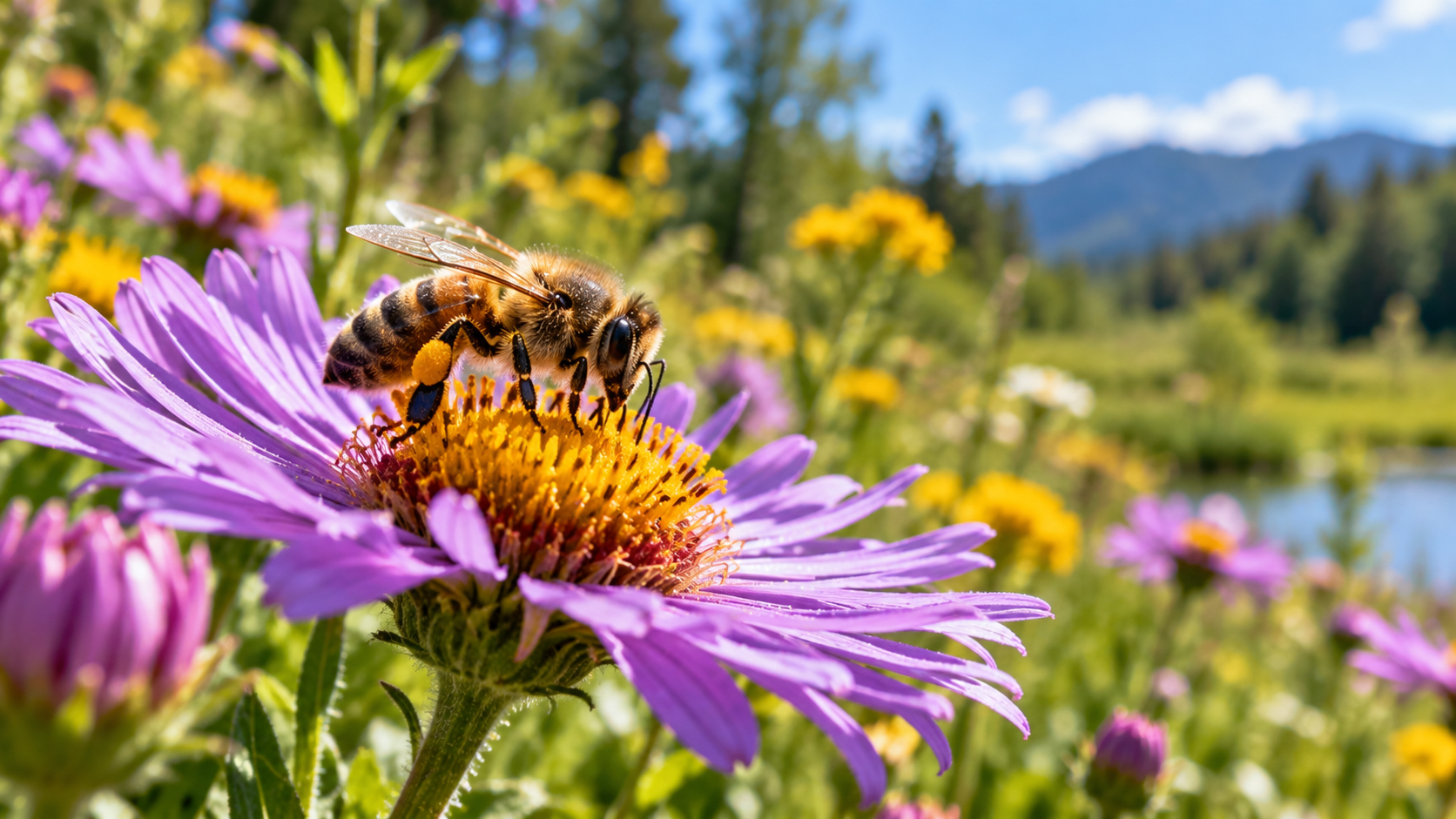
A child watching a bee land on a flower is seeing much more than an insect.
The bee is looking for food.
The flower needs pollination.
The bee carries pollen to another flower.
The plant can then produce seeds.
That tiny interaction is part of a much larger system.
The same is true of predators and prey, plants and herbivores, birds and seeds, fungi and forests.
food chains
pollination
competition
cooperation
predator and prey
ecosystems
biodiversity
They don't need formal definitions first. They can start by noticing what happens.
Nature doesn't have to be somewhere special
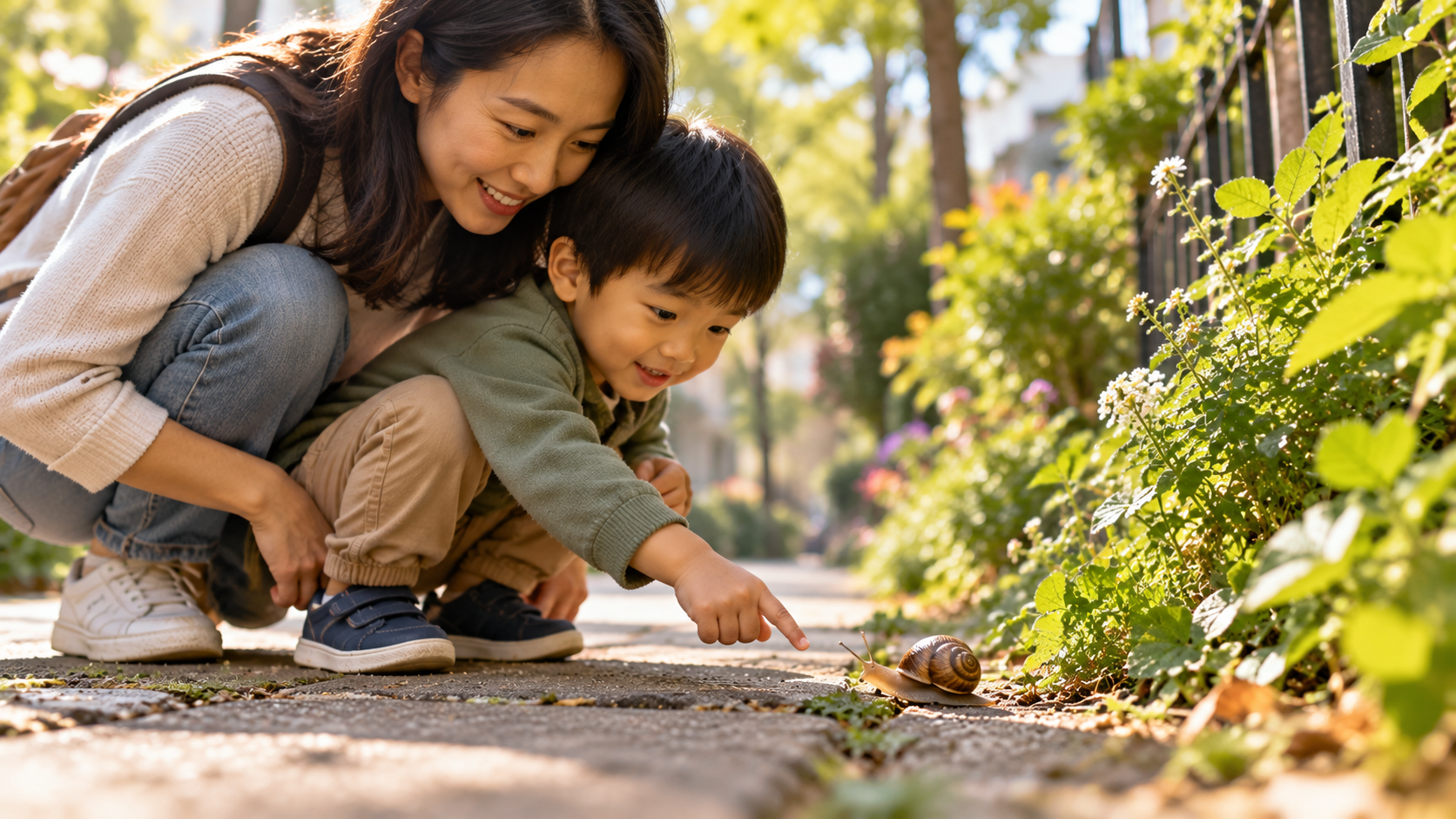
One of the best things about exploring nature is that you don't necessarily need a zoo, museum, or nature reserve.
Look outside.
Research on nature-based play has found that natural environments can create richer opportunities for children's play, exploration, and cognitive engagement.
A city street has trees and birds.
A garden has insects and plants.
A balcony can attract birds.
A park can reveal seasonal changes.
Even a crack in the pavement can contain a tiny ecosystem.
You don't need to turn every outdoor experience into an activity. Sometimes the most useful thing is simply to stop and look.
Explore by ageFollow what your child notices
Your child points at a bird.
You could tell them what species it is.
Or you could ask: “What do you notice about it?”
Maybe it has a long beak.
Maybe it keeps looking at the ground.
Maybe it flies away whenever someone comes close.
Why is its beak shaped that way?
What does it eat?
Why does it live here?
Where does it sleep?
Does it stay here all year?
The child's observation becomes the starting point.
Animals and nature can lead almost anywhere
The natural world doesn't fit neatly into one subject.
A question about birds can lead to:
A question about trees can lead to:
A question about whales can lead to:
A question about dinosaurs can lead to:
That's part of what makes animals and nature such a rich area for children's learning. One subject can connect to many others.
What can children explore?
There are countless directions to take.
Animals
Animal behavior, habitats, communication, reproduction, movement, diets, defenses, and survival.
Plants
Seeds, roots, flowers, trees, growth, pollination, forests, and how plants interact with their environment.
Habitats
Forests, deserts, oceans, rivers, mountains, grasslands, wetlands, and polar environments.
Adaptation
Camouflage, migration, hibernation, specialized body structures, and behaviors that help living things survive.
Ecosystems
Food webs, predators and prey, pollination, decomposition, cooperation, competition, and biodiversity.
Oceans
Marine animals, coral reefs, deep-sea environments, tides, currents, and the role of oceans in life on Earth.
Conservation
Endangered species, habitat loss, extinction, pollution, biodiversity, and how people affect the natural world.
There is no single way to explore nature
A three-year-old might spend ten minutes watching an ant.
A five-year-old might want to know where it is going.
A seven-year-old might wonder how the colony works.
The subject is the same.
The conversation can grow with the child.
That's why the most useful starting point isn't always a particular topic or activity.
It can simply be something the child genuinely wants to understand.
You don't have to be a nature expert
You may not know why a particular bird behaves the way it does.
You may not know the name of a flower.
You may not know how bees communicate.
That's fine.
You can wonder together.
“I don't know. Let's find out.” That response teaches something important in itself: not knowing is not the end of the conversation. It can be the beginning of an investigation.
How Sapienta fits in
The world is full of interesting things for children to discover.
But a parent doesn't need to plan a complete learning program around every interest.
That's where Sapienta can help.
Sapienta learns about your child's age, interests, and previous explorations, then suggests six personalized things worth exploring.
Choose one and Sapienta creates a short, factual exploration with a real picture and a takeaway, written at a level that fits your child.
You can then tell Sapienta whether your child loved it and whether the level was too easy, just right, or too difficult.
The next recommendations can adapt.
So when your child becomes fascinated by an animal, a place, or something they saw outside, you don't have to figure out the next ten steps.
You can simply start exploring.