


History starts with people
It can be tempting to introduce history through famous names and important dates. For a child, though, everyday life is often a much better starting point.
Imagine walking through an ancient city. What would you smell? Where would people get their water? What would a child do during the day? What would people eat? How would a merchant know where to sell something? What would happen if someone became sick?
Questions like these make the past concrete. A child doesn't have to understand an entire civilization before they can become interested in one small part of it.
Research collected by the American Historical Association has found that children often know more about the social and material side of the past than adults and educators expect. Their knowledge may come from family conversations, museums, travel, books, films, and other experiences outside school. Starting with what children already find familiar or interesting can therefore provide a much stronger route into more complex historical ideas.
What was life like in the past?
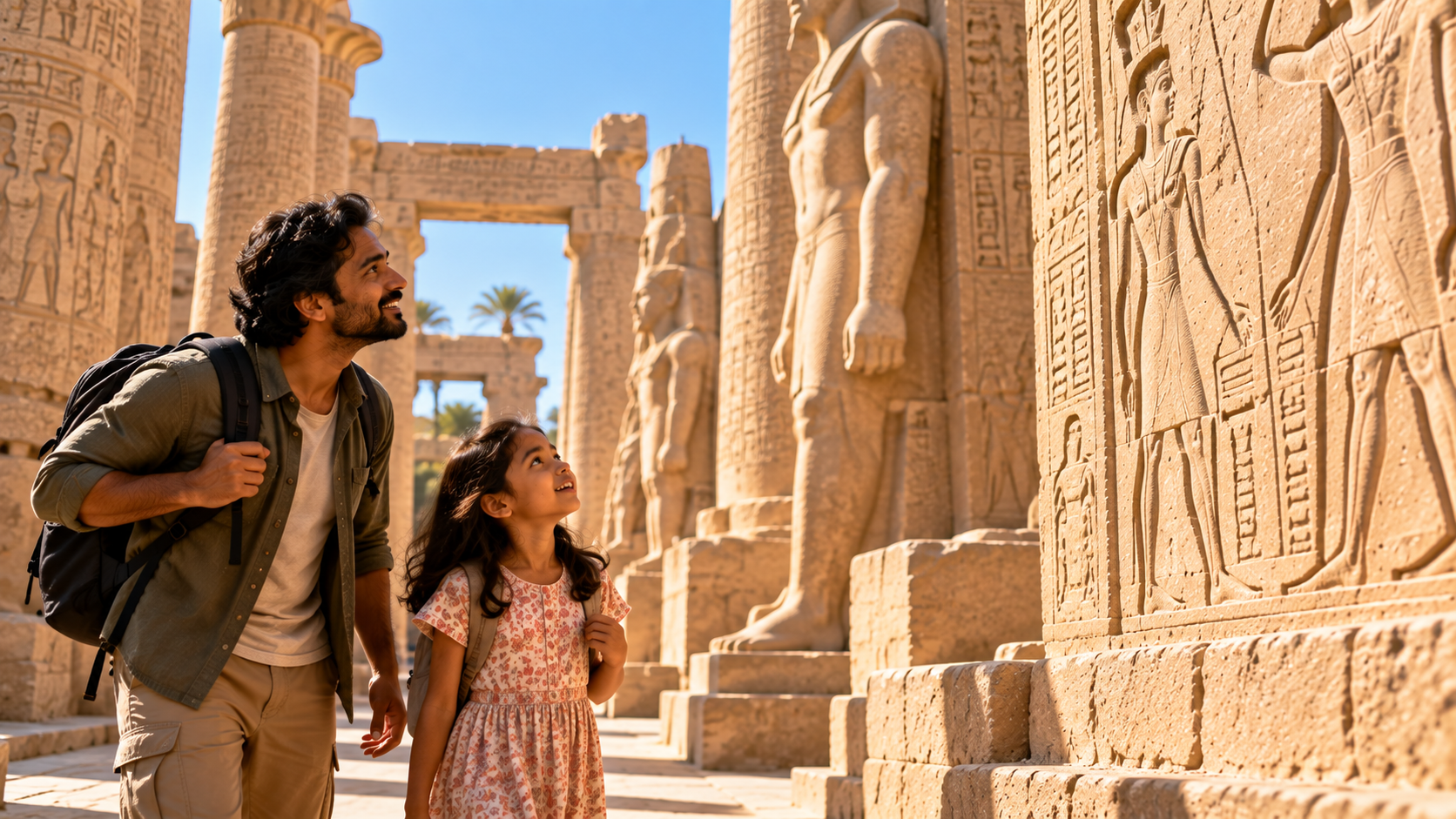
This question can take you almost anywhere.
A child who wants to know what people ate in Ancient Egypt might discover the Nile and agriculture. From there, they might wonder why the river mattered so much, how farmers organized their work, how food reached cities, and why Egyptian society developed where it did.
Someone fascinated by medieval castles might start wondering who lived inside them, why castles were built, how they were defended, and what life looked like outside the walls.
A question about an old family photograph can lead somewhere completely different. Who are the people? Where were they living? What has changed since the photograph was taken?
History becomes easier to connect with when children can picture the people who actually lived it.
Discover civilizations through the lives they left behind
Civilizations give children a chance to compare different ways of organizing human life.
Ancient Egypt offers questions about the Nile, farming, writing, religion, architecture, and government. Ancient Greece opens the door to city-states, mythology, philosophy, art, and early forms of democracy. Ancient Rome can lead to roads, engineering, law, cities, trade, and empire. Ancient China offers a different history of government, technology, philosophy, writing, and trade.
There are many other stories worth discovering too, from Mesopotamia and the civilizations of South and Central America to medieval societies and the rapidly changing world of the early modern period.
The value is not in working through a checklist of civilizations. It is in seeing that people living in different places and periods faced different circumstances and came up with different ways to organize their lives.
History is about change
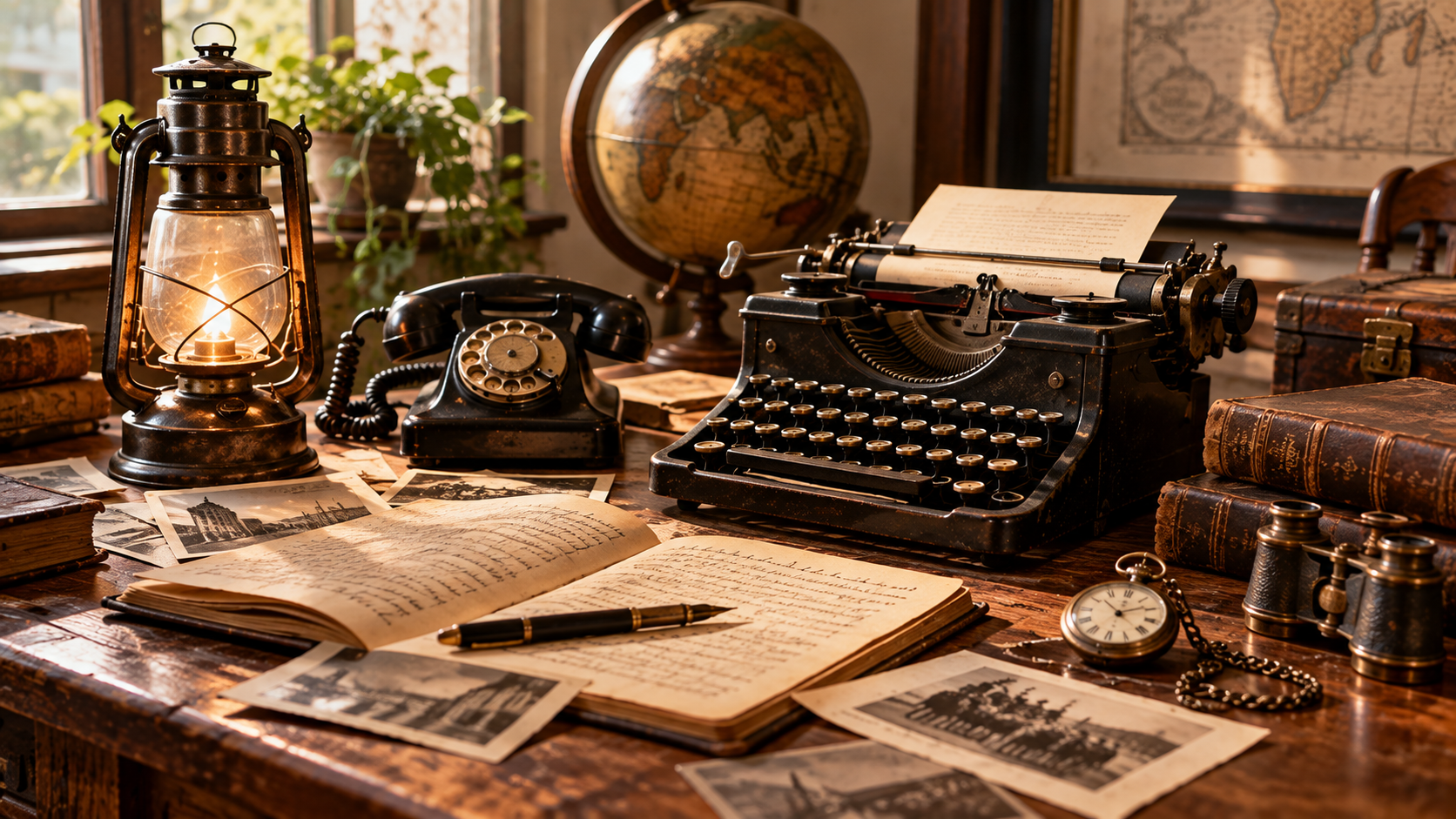
One of the most interesting things about the past is that almost everything children take for granted was once different.
Take communication. People once relied heavily on spoken messages and handwritten letters. Printing changed how information could spread. Telegraphs made long-distance communication much faster. Telephones changed it again, followed by radio, television, computers, and the internet.
The same story can be told about transportation, medicine, agriculture, homes, education, and almost every other part of everyday life.
A useful historical question is simply:
"What was this like before?"
Once children start asking it, they begin to notice that today's world is only one point in a much longer story.
How do we know what happened?
This is where history becomes especially interesting.
We weren't there. Historians have to work with what people in the past left behind. An old building can tell us something about how people lived. A coin can reveal something about trade or political power. A letter can tell us how one person experienced an event. An archaeological site can reveal things that no written record mentions.
But sources don't always give us a complete or simple answer.
Two people can describe the same event differently. A painting may show what someone wanted others to see. A diary reflects one person's experience. An archaeological discovery may answer one question while creating several new ones.
Research on historical thinking has consistently emphasized the importance of helping students work with evidence, understand different perspectives, consider cause and consequence, and recognize that historical accounts involve interpretation. A review of research on historical thinking in elementary education describes these abilities as appropriate areas of learning even during the elementary years.
That changes the question a child asks. Instead of only asking, "What happened?" they can eventually ask, "How do we know?"
History isn't only about famous people
Kings, presidents, explorers, inventors, and other famous figures have a place in history. But they are only part of the picture.
Most people who lived in the past never became famous. They were farmers, builders, merchants, craftspeople, parents, teachers, children, soldiers, and neighbors. Their lives reveal how societies actually functioned.
A child learning about an ancient civilization through the life of an ordinary family may understand things that are difficult to see in a list of rulers and battles. What people ate, how they worked, where they lived, and what they believed can reveal how a society was organized.
It also helps children see that historical change rarely comes from one person acting alone. Large changes often involve technology, economics, institutions, movements, and the actions of many people over long periods of time.
One historical question can lead into many subjects
History rarely stays in one subject for long.
Why did so many ancient cities develop near rivers?
Why were the pyramids built?
Why did people begin travelling across oceans?
This is one reason history can become such an important part of a child's broader understanding of the world. Learning about the past often gives other subjects somewhere to connect.
Look for history around you
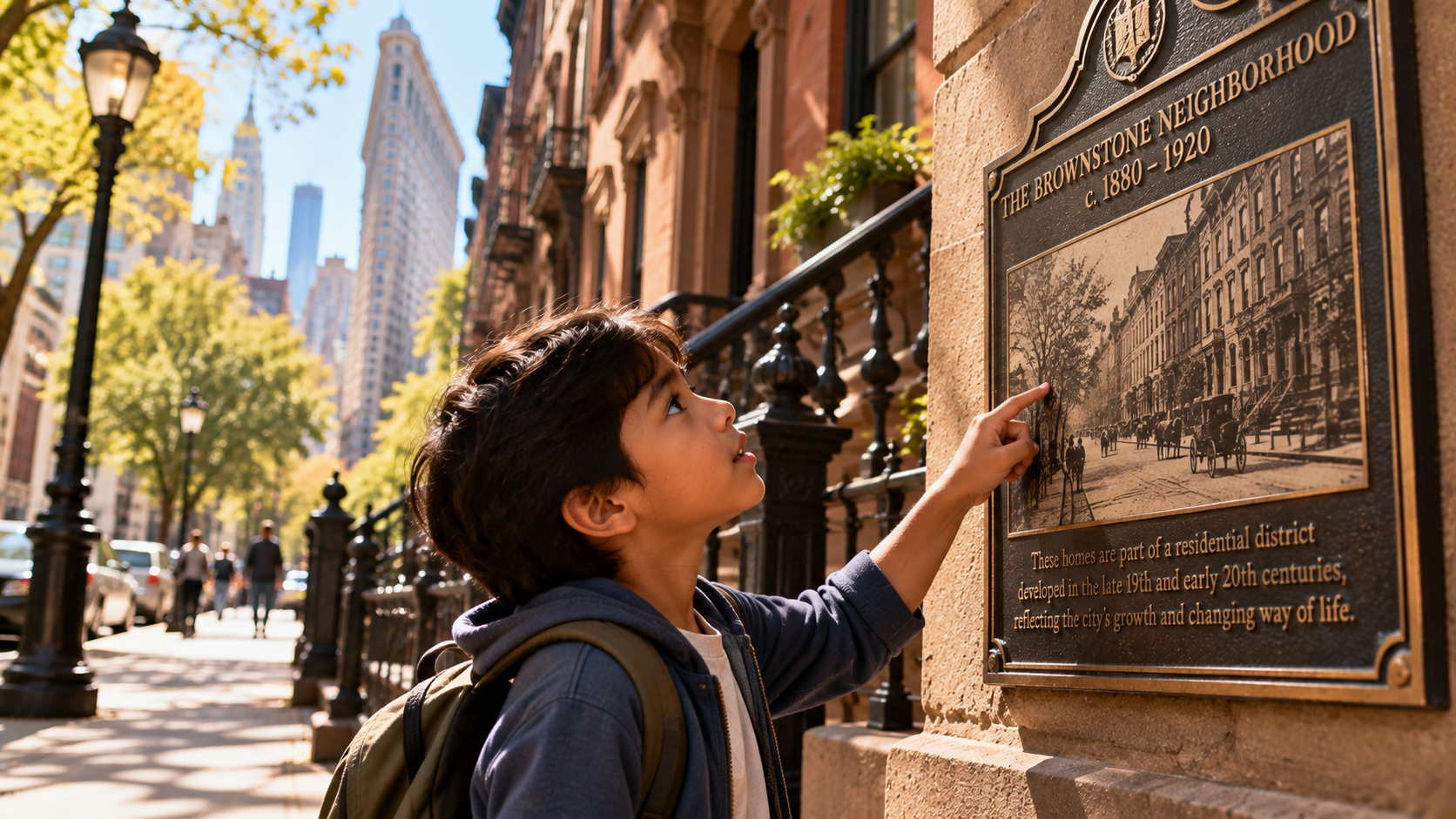
You don't need to visit an ancient ruin to find something worth investigating.
An old building in your neighborhood has a history. So does a street name, a family photograph, a monument, a railway line, or an object that has been sitting in a drawer for decades.
Ask what you can learn from it.
Who made this?
Why was it made?
Who used it?
What was this place like before?
What has changed?
A child can start thinking historically without realizing that they are doing anything particularly academic. They are simply trying to understand why something is the way it is.
What kinds of history can children explore?
There are many possible starting points, and the best one depends on what catches a child's attention.
Ancient civilizations
Can introduce children to Egypt, Greece, Rome, Mesopotamia, China, India, and the civilizations of the Americas.
Everyday life
Opens questions about childhood, homes, food, clothing, work, education, celebrations, and family life.
Inventions and technology
Can show how writing, farming, ships, printing, medicine, machines, transportation, and communication changed people's lives.
Cities and societies
Can lead to questions about how communities formed, how governments worked, why cities grew, and why some societies changed or disappeared.
Exploration and migration
Can help children understand why people moved, how they travelled, how different regions became connected, and how those movements changed societies.
Art and culture
Offer another way into the past through architecture, music, literature, religion, traditions, and the things people created to express what mattered to them.
And sometimes the most interesting subject is simply a person, place, or event that your child happens to become curious about.
Do children need to memorize historical dates?
Dates have a purpose. They help us understand when events happened and how different events relate to one another. But a date on its own tells a child very little.
Knowing that something happened in a particular year matters much more when a child understands what happened, why it happened, what came before it, and what changed afterward.
Research on children's historical understanding has found that young learners can work with chronological order and develop ideas about historical time, even though precise dates may not mean much to them at first. The research summarized by the American Historical Association also suggests that children often benefit from exploring longer processes and changes rather than treating history as a simple sequence of isolated events.
So instead of starting with "Remember this date," start with the story.
History doesn't have to feel like school
A museum can become a history lesson without anyone calling it one.
So can an old photograph, a family story, a visit to another city, a historical building, a map, a book, or a question that comes up while watching a movie.
If your child asks why a city has an old wall around it, you have somewhere to start. If they wonder why people lived differently in the past, you can follow that question. You don't need to prepare a worksheet or know exactly where the conversation will end.
Sometimes the best historical discoveries begin with something small.
Explore history at your child's level
A child might begin by wondering what children did for fun in Ancient Rome. Another might become fascinated by how ancient people built enormous monuments. Someone else may want to know why people started using money.
The subject can grow with the child. A simple question about an old object can eventually lead to technology, economics, geography, politics, or culture.
You don't have to be a history expert
Parents sometimes avoid history because they feel they don't remember enough from school. You don't need to know every civilization, date, ruler, or battle.
You can investigate alongside your child.
If you don't know why an ancient city was built in a particular place, find out together. If you aren't sure what an old object was used for, look for clues. If two accounts of an event don't agree, that's an opportunity to ask why.
You can model something more useful than having every answer: being genuinely interested in finding one.
How Sapienta fits in
There is an enormous amount of history a child could explore. The challenge for a parent isn't a lack of material. There are books, museums, documentaries, websites, maps, and thousands of fascinating subjects.
The harder question is what to introduce to your particular child, and how deeply to go.
That's where Sapienta comes in.
Sapienta learns about your child's age, interests, previous explorations, and feedback, then suggests six things worth exploring. Choose one and Sapienta creates a short, factual exploration with a real picture and a takeaway, written at a level that fits your child.
Afterward, you can tell Sapienta whether your child loved it and whether the level was too easy, just right, or too difficult. The recommendations can adapt as you continue exploring.
The goal isn't to finish a history curriculum. It's to help your child build a growing understanding of the world.
Frequently asked questions
What history should kids learn?
Children can explore ancient civilizations, everyday life, inventions, important events, cultures, migration, exploration, and the ways societies change over time. There is no single list of historical facts that every child needs to memorize.
What are the most important ancient civilizations for kids to learn about?
Ancient Egypt, Greece, Rome, Mesopotamia, China, India, and the civilizations of the Americas can all provide fascinating starting points. The goal is less about ranking civilizations and more about helping children understand how different societies developed.
How can I make history interesting for kids?
Start with something concrete that your child already finds interesting. An old building, a historical object, a famous person, a map, or a question about everyday life can all become an entry point. From there, follow the questions that naturally arise.
Should children memorize historical dates?
Dates help children understand chronology, but memorizing them without understanding the events around them has limited value. Children also benefit from learning about causes, consequences, evidence, perspectives, and changes over time.
At what age should children start learning history?
Children can start exploring the past from a young age. Family stories, old photographs, historical objects, museums, and questions about how people lived in the past can all introduce historical thinking.
How can children learn about ancient civilizations?
Start with the people who lived there. Explore their homes, food, work, cities, beliefs, inventions, and surroundings. Those details can lead naturally into larger questions about how the civilization developed and changed.