

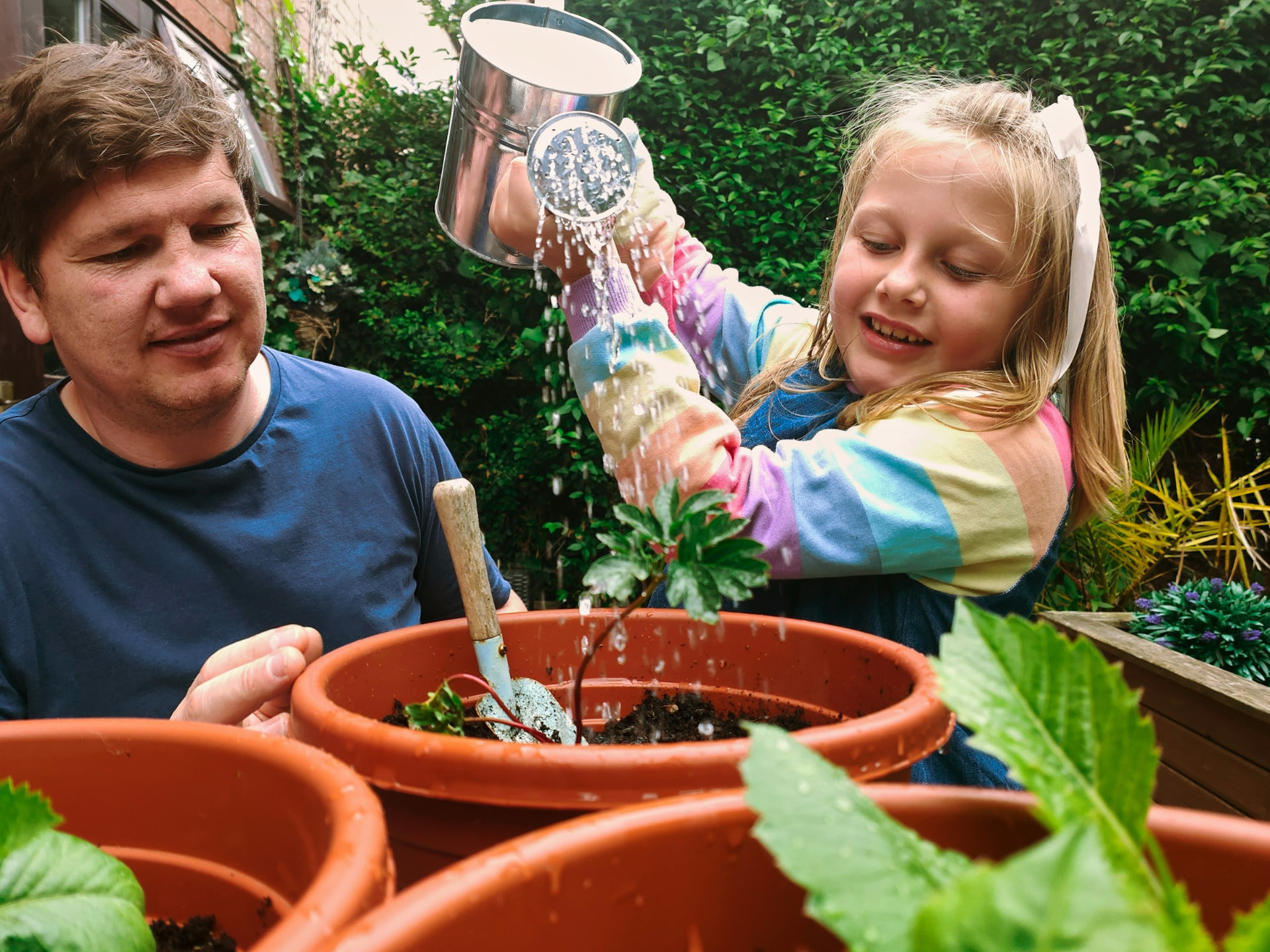
The world around us
Science is everywhere.
You can find it in a puddle after the rain, a shadow moving across the ground, a seed growing into a plant, or the Moon appearing in the evening sky.
Earth
Rocks, oceans, mountains, volcanoes, weather, climate, water, and the changing surface of our planet.
Explore
- Why do volcanoes erupt?
- Where does rain come from?
- Why are some places hot and others cold?
Plants & Animals
Plants, animals, habitats, food chains, adaptation, and the incredible variety of life.
Explore
- How do plants grow?
- Why do birds migrate?
- How do animals survive in extreme environments?
The Human Body
The brain, senses, bones, muscles, digestion, sleep, growth, and everything happening inside us.
Explore
- Why does our heart beat?
- How do we remember things?
- How does our body heal?
How things work
Some of the most fascinating science questions are about things we see every day.
Forces & Motion
Gravity, friction, movement, balance, energy, and the forces that make things move or stop.
Explore
- Why does a ball bounce?
- Why do things fall?
- How does an airplane stay in the air?
Light & Sound
Shadows, reflections, colors, vibrations, echoes, and the ways light and sound travel.
Explore
- Why is the sky blue?
- How does a shadow form?
- How can we hear something from far away?
Electricity & Magnetism
Magnets, static electricity, circuits, batteries, and the invisible forces around us.
Explore
- Why do magnets attract some things?
- How does a battery make electricity?
- Why can a balloon stick to a wall?
Matter & Materials
Water, air, solids, liquids, gases, mixtures, and the changes materials can undergo.
Explore
- Why does ice melt?
- Why does salt disappear in water?
- What happens when water turns into steam?
Look beyond Earth
Space gives children some of the biggest questions imaginable.
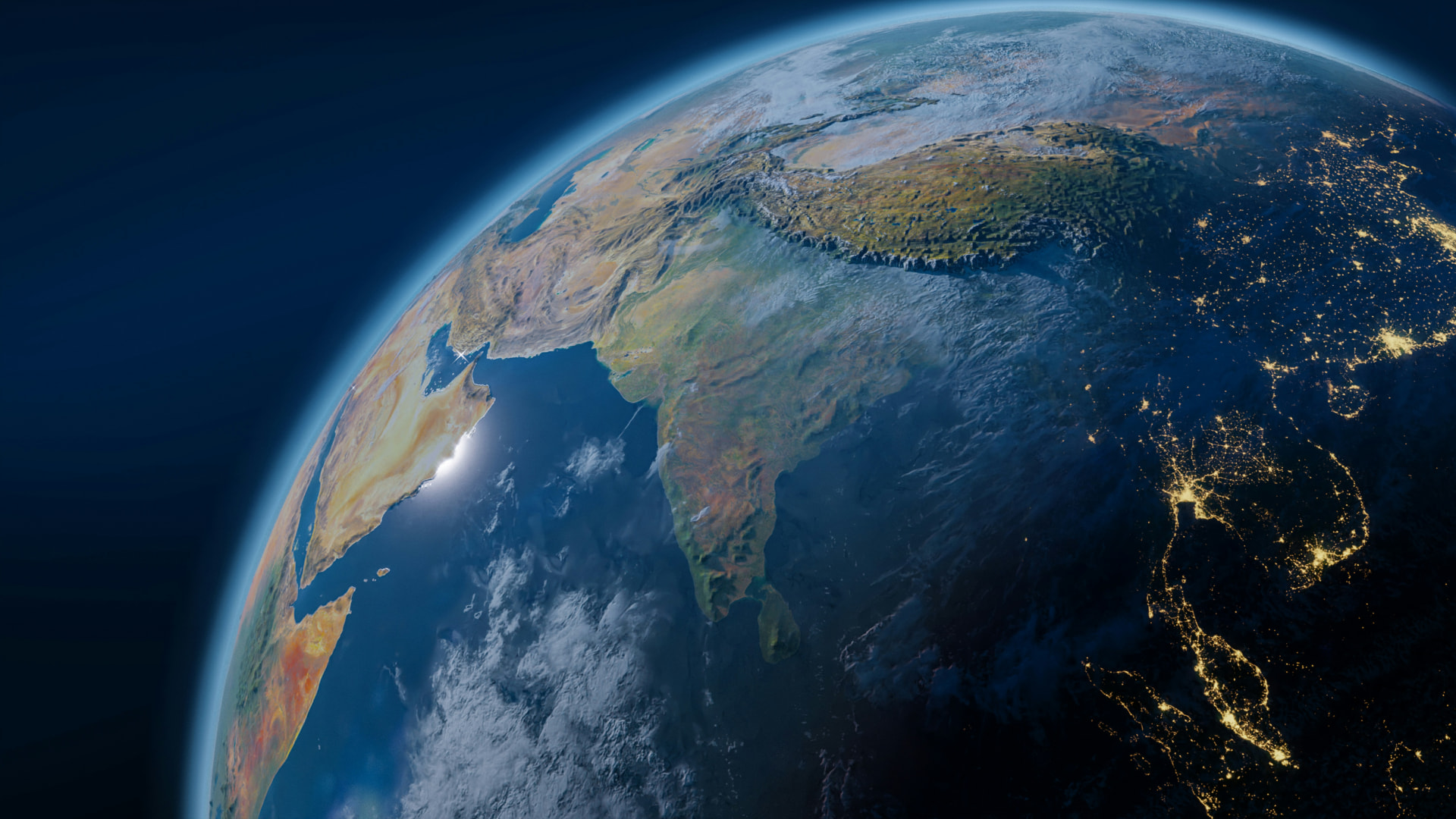
Space
The Moon, Sun, planets, stars, gravity, rockets, galaxies, and the universe.
Explore
- Why does the Moon change shape?
- Why do planets orbit the Sun?
- What would happen without gravity?
- How do we know what stars are made of?
The more you explore space, the more questions appear.
And that's part of the fun.
Science isn't just a collection of facts
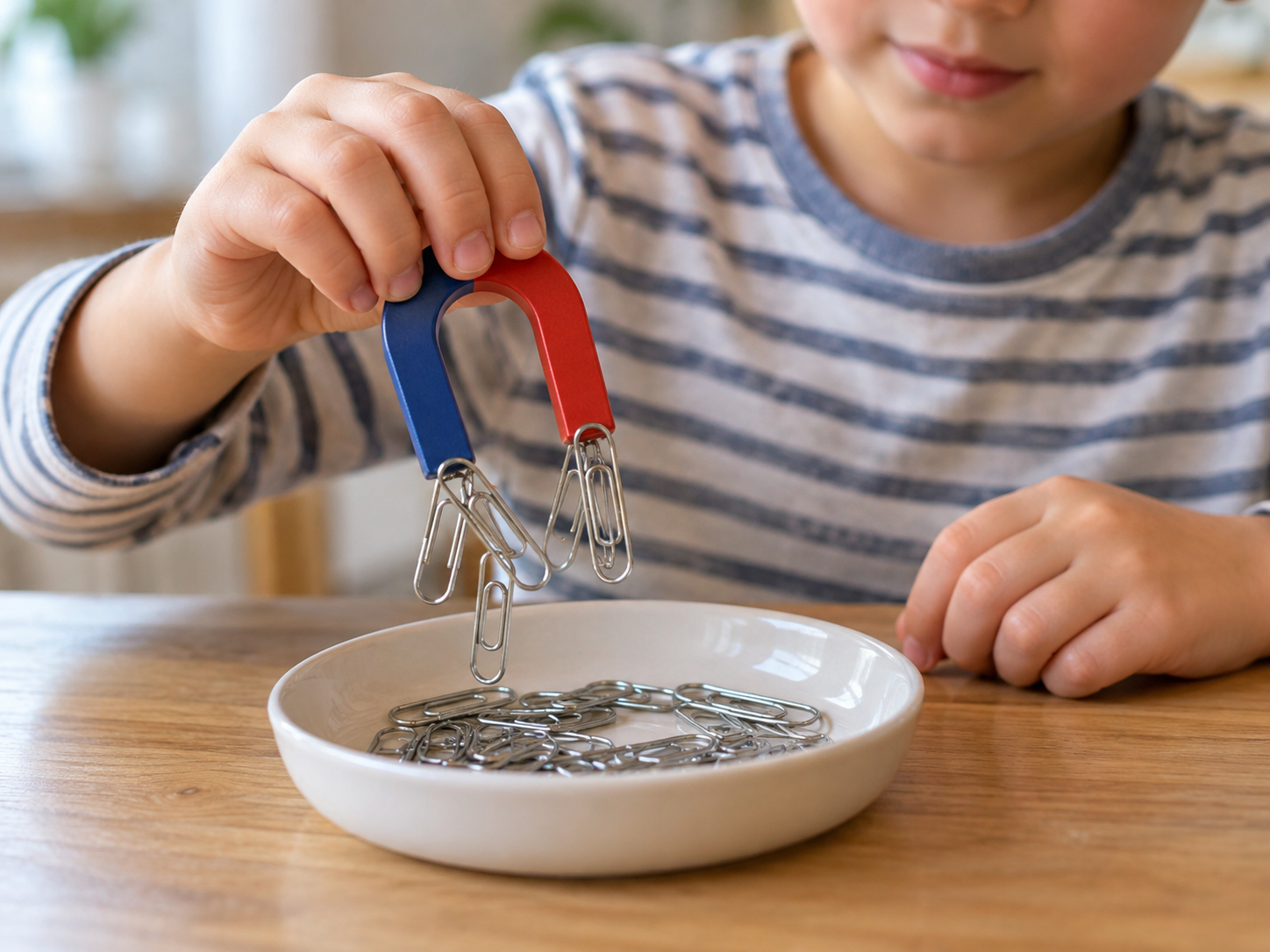
Science is also a way of finding things out.
A simple experiment with ice can become a conversation about temperature.
A paper airplane can lead to forces and flight.
Watching ants can lead to questions about communication and animal behavior.
A shadow can lead to light, the Sun, the Earth, and time.
You notice something.
You ask a question.
You make an idea about what might happen.
You test it.
You look at what happened.
Then you might change your mind.
One observation can open an entire world.
You don't need a science lab
Some of the best science starts with ordinary things.
A glass of water.
A flashlight.
A magnet.
A ball.
A plant.
A cardboard box.
A walk outside.
Sometimes it's enough to ask: “What do you think will happen?” Then find out.
Science connects to everything
Real questions don't stay inside one subject.
Why did people settle near rivers?
How does an airplane fly?
Why are there different kinds of animals?
That's one of the most interesting things about science: it helps explain the world, and the world doesn't divide itself into school subjects.
Explore science at your child's level
The same scientific idea can become a very different exploration depending on the child.
A young child might explore: Why do shadows exist?
An older child might explore: Why does the length of a shadow change during the day?
And later: How can scientists use shadows to understand the movement of the Earth?
The subject can stay the same while the questions become richer.
Where should you start?
You don't need to choose the “right” science topic.
Start with something your child finds interesting.
A dinosaur.
A storm.
A bird.
A volcano.
The Moon.
A broken toy.
A question at breakfast.
Follow it.
See where it leads.
This is what Sapienta is built for
There are thousands of fascinating things a child could explore.
The hard part isn't finding interesting subjects. It's knowing what to explore next.
Sapienta considers your child's age, interests, previous explorations, and feedback and suggests six things worth discovering.
Choose one and Sapienta creates a short, factual exploration with a real picture and a takeaway, at a level that fits your child.
Then you can tell Sapienta what your child thought.
Over time, the recommendations become more personal.
You don't need to plan your child's entire journey through science. You just need to find the next interesting thing.