

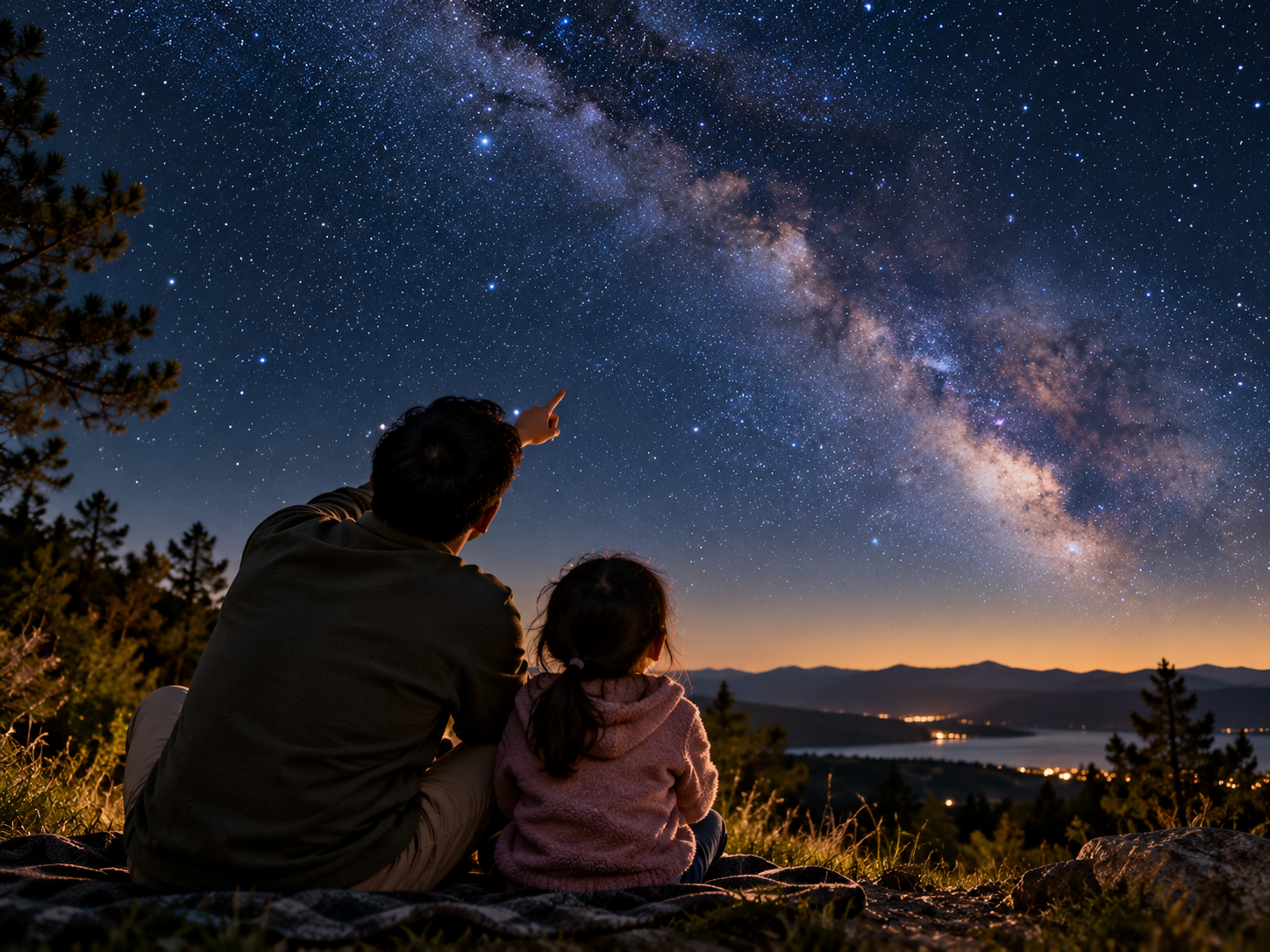
Why are children so fascinated by space?
Space combines things children naturally find intriguing: enormous distances, strange worlds, powerful forces, unfamiliar objects, and questions that don't have obvious answers.
A child can look at the Moon and immediately encounter something that is both familiar and mysterious.
Why does it follow us?
Why does it have different shapes?
Why can't we see the whole Moon all the time?
Questions like these can become opportunities to build scientific understanding.
Research helps explain how children learn science
Research on children's science learning emphasizes the value of building explanations from children's existing ideas and using questions, observation, and evidence to develop understanding. The National Academies' research on how children learn science describes children as active learners who develop increasingly sophisticated ways of organizing and explaining the world.
Space is particularly good for this because there is always another question behind the first one.
Start with the Moon
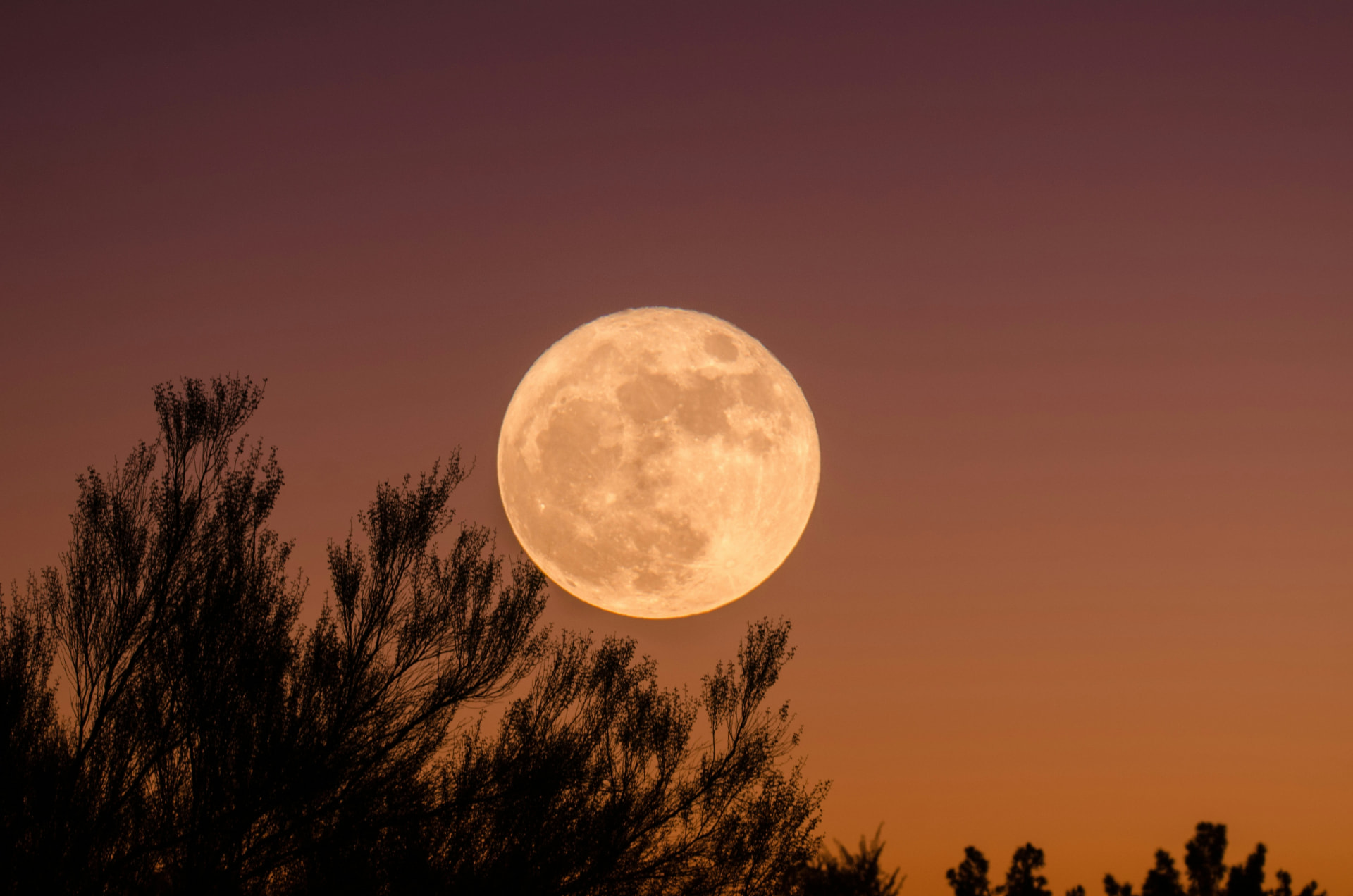
The Moon is probably the easiest place to begin.
You can see it without a telescope.
You can watch it change position.
Its appearance changes over the course of a month.
And it connects to some fundamental ideas about how objects move through space.
Start with: Why does the Moon seem to change shape?
Then explore:
The Moon reflects sunlight.
The Moon orbits Earth.
Different parts of the Moon are illuminated as its position changes.
What looks like a simple question becomes an introduction to light, shadows, orbits, and observation. And you can actually watch it happen.
Explore our Solar System
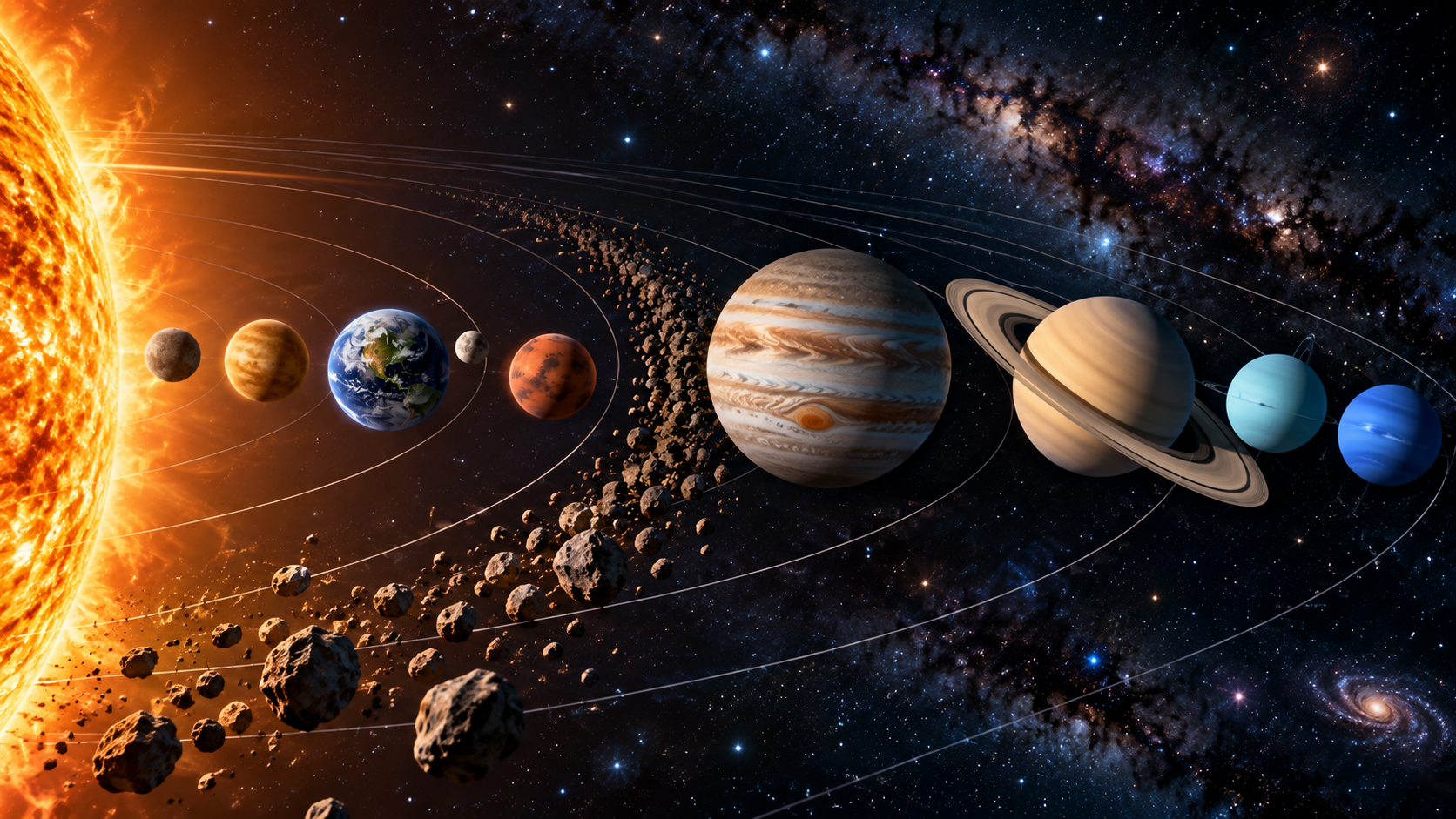
Our Solar System contains the Sun, eight planets, dwarf planets, moons, asteroids, comets, and countless smaller objects.
But children don't need to memorize all of them.
The more interesting questions are often about what makes these worlds different.
Why is Mercury so hot during the day?
Why does Mars look red?
Why does Jupiter have such enormous storms?
Why does Saturn have rings?
Why is Earth the only world we know to have life?
Comparing planets helps children understand that our planet is part of a much larger system. It also introduces ideas about atmosphere, temperature, gravity, distance, and planetary formation.
The Sun is a star
For many children, the Sun and the stars seem like completely different things.
The Sun is the bright object we see during the day.
Stars are tiny points of light at night.
But the Sun is a star too.
The difference is distance.
That simple realization opens the door to some enormous ideas.
How far away are the stars?
How big are they?
Why do they shine?
Are all stars the same?
How do scientists know what stars are made of?
A single observation from the night sky can lead into light, energy, distance, and the life cycle of stars.
Gravity connects everything
Gravity can be introduced through something as simple as dropping a ball.
But gravity also explains why:
we stay on Earth
the Moon orbits Earth
Earth orbits the Sun
planets stay in their paths
moons orbit planets
The same force that makes a ball fall is part of what holds the Solar System together. That's one of the beautiful things about space: a familiar experience can lead to an enormous idea.
How do we know what is happening in space?
Children sometimes assume that scientists can simply travel to distant planets or stars to find out what is there.
Usually, they can't.
Astronomers learn by observing light, using telescopes, spacecraft, measurements, and mathematical models.
We can study objects that are millions or even billions of light-years away without ever visiting them.
That raises another fascinating question: How can light tell us what something is made of?
We don't always need to touch something to learn about it. We can gather evidence.
Space is also a story about exploration
Space isn't only about planets and stars.
It's also about people trying to understand what they see.
Ancient civilizations watched the sky.
People developed calendars based on the movements of the Sun and Moon.
Astronomers created increasingly precise models of the heavens.
Scientists developed telescopes.
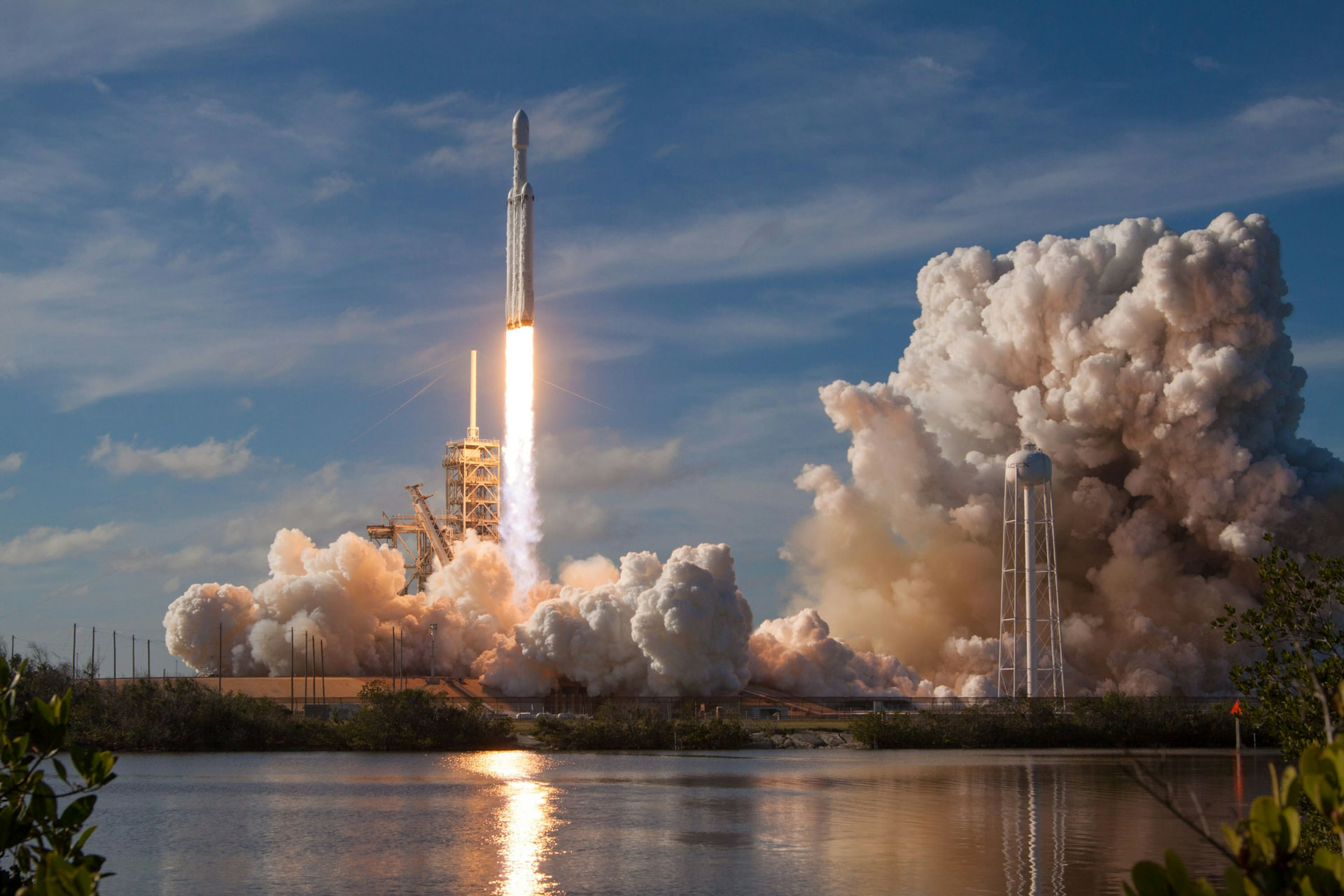
Engineers built rockets and spacecraft.
Humans eventually walked on the Moon.
Today, spacecraft explore worlds that humans have never visited.
Space therefore connects science with history, mathematics, engineering, technology, and human curiosity.
What can children explore in space?
The Moon
Phases, craters, eclipses, tides, exploration, and the relationship between Earth and its nearest neighbor.
The Sun
Stars, light, energy, solar activity, and the Sun's importance to life on Earth.
Planets
The eight planets, their atmospheres, surfaces, temperatures, moons, and differences.
Stars
How stars form, how they shine, how they change, and how astronomers study them.
Galaxies & the Universe
Galaxies, black holes, the scale of the universe, and what scientists know about its history.
Space Exploration
Rockets, spacecraft, satellites, astronauts, the Moon missions, Mars exploration, and robotic missions.
Earth from Space
Satellites, weather observation, GPS, climate monitoring, and how space technology helps us understand our own planet.
Space questions can become science questions
Why does the Moon orbit Earth?
Why is Mars red?
How do astronauts breathe?
How do we know there are other galaxies?
Space is full of questions that naturally connect different areas of knowledge.
You don't need a telescope
Space exploration can begin with the sky above you.
Look for the Moon.
Notice where it appears.
Watch how it changes over several nights.
Find a bright planet.
Look at the stars.
Use a map of the night sky.
Ask what you can see and what you cannot.
Then start wondering why.
The important part isn't having expensive equipment. It's learning to look carefully.
Some space questions are surprisingly difficult
Children may ask questions that seem simple but lead to complicated ideas.
What is the universe expanding into?
What would happen if you fell into a black hole?
Could there be life somewhere else?
What was the universe like before there were stars?
You don't need to answer all of them immediately. Some questions are valuable precisely because they show children that knowledge has boundaries—and that scientists are still investigating some of the biggest questions we can ask.
Space connects the very big with the very small
Space can feel impossibly distant.
But many of the things that make it understandable are familiar.
A shadow.
A flashlight.
A spinning ball.
A falling object.
A clock.
A magnet.
A glass of water.
These everyday experiences can become stepping stones toward much bigger ideas. The questions can be enormous, but the starting points can be very simple.
Explore space at your child's level
A young child might begin with: Why does the Moon come out at night?
An older child might explore: Why does the Moon have phases?
Later, the same child might ask: How do the positions of the Sun, Earth, and Moon create the phases we see?
There is no single right age to become interested in space.
The same subject can support many levels of understanding.
You don't have to know all the answers
Space has a useful advantage for parents: nobody knows everything about it.
You may not know why a particular planet has its atmosphere.
You may not know how astronomers measure the distance to a star.
You may not know whether life exists elsewhere.
That's okay.
You can say: “I don't know. Let's find out.” Then look at the evidence together. The goal isn't to turn yourself into an astronomy teacher. It's to show your child that a question is worth following.
How Sapienta fits in
There are thousands of fascinating things a child could discover about space.
The challenge is not finding interesting information. It's finding the right starting point for your particular child.
Sapienta learns about your child's age, interests, previous explorations, and feedback and suggests six personalized things worth exploring.
Maybe today it's the Moon.
Next time it might be black holes, Mars, the history of space exploration, or how satellites help us understand Earth.
Choose one and Sapienta creates a short, factual exploration with a real picture and a takeaway, at a level that fits your child.
You can then tell Sapienta whether your child loved it and whether the level was too easy, just right, or too difficult.
The recommendations can adapt.
The universe is enormous. You don't have to plan the whole journey.