

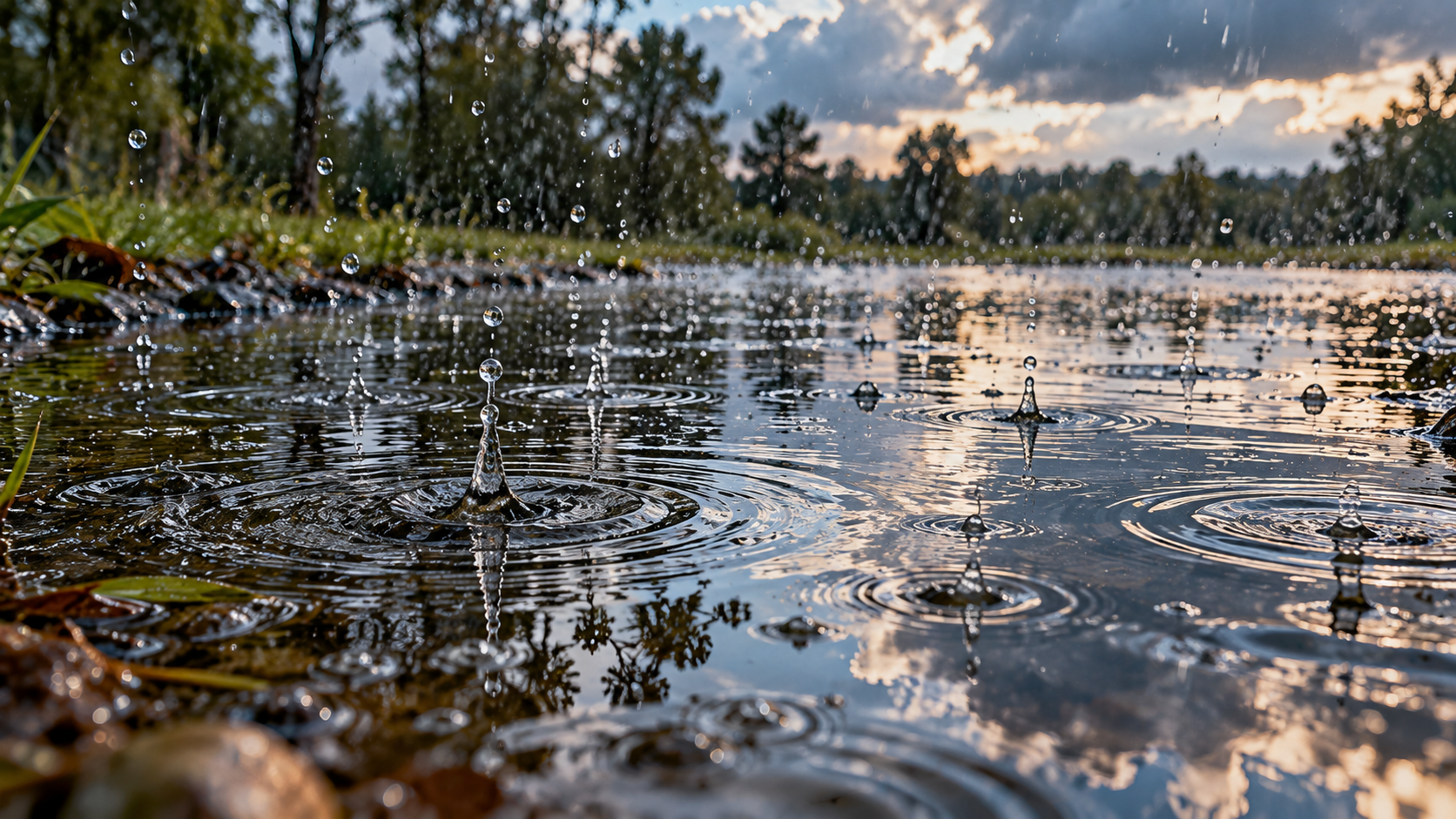
The water in the air
There is water all around us, even when we cannot see it. Oceans, lakes, rivers, and puddles contain water, but so do plants, animals, and people.
When the Sun warms water on Earth's surface, some of it changes into an invisible gas called water vapor and rises into the air. This is why a puddle can slowly disappear after a sunny day or why wet clothes become dry when you leave them outside. The water has not vanished. It has changed into a form that can travel through the air.
This happens all the time, although we usually don't notice it.
How does a cloud form?
As water vapor rises higher into the atmosphere, the air around it becomes colder. When the water vapor cools enough, it turns back into tiny drops of liquid water.
Those drops are incredibly small. They can gather around tiny particles floating in the air, such as dust or salt from the ocean. Billions of these tiny drops can come together to form a cloud.
A cloud may look like one fluffy object from the ground, but it is really made up of enormous numbers of tiny water drops or tiny pieces of ice floating in the air.
So why doesn't every cloud make rain?
The drops inside a cloud are so small and light that they can remain floating in the air. But sometimes they bump into one another and join together. As more drops join, they become larger and heavier.
Eventually, some drops become too heavy to stay suspended in the cloud. They begin to fall toward the ground.
That's rain.
The drops don't all fall at the same time. Some may continue growing inside the cloud while others fall, which is why a cloud can keep producing rain for a while.
What about snow and hail?
Rain isn't the only thing that can fall from a cloud. If the air is cold enough, water can freeze into ice crystals, which may fall as snow.
Hail forms differently. Inside large storm clouds, strong winds can carry drops of water upward into very cold parts of the cloud. The water freezes, and more layers of ice can build up around it. Eventually, the pieces of ice become heavy enough to fall.
So when you see rain, snow, or hail, you're seeing different ways that water can travel from the atmosphere back to Earth's surface.
Why does it rain more in some places?
Some parts of the world receive enormous amounts of rain, while others can go for months or even years with very little.
One reason is that warm air can contain a lot of water vapor. When warm, moist air rises and cools, clouds can form and rain can follow.
Mountains can make an especially big difference. When moist air reaches a mountain, the mountain can force the air upward. As the air rises, it cools, which can lead to clouds and heavy rain on one side of the mountain.
By the time the air reaches the other side, much of its moisture may already be gone. The result can be a much drier landscape.
This is one reason you can sometimes find forests, farms, and even deserts surprisingly close to one another.
Where does the rain go?
When rain reaches the ground, its journey isn't finished. Some water soaks into the soil, where plants can use it or where it can remain underground. Some flows into streams and rivers, eventually making its way toward lakes and oceans.
Plants also release some of their water back into the air. And when the Sun warms the surface of oceans, lakes, and other bodies of water, more water becomes water vapor and rises.
Then clouds form again, and eventually more water falls.
This enormous cycle is called the water cycle. You don't need to memorize the name to understand the idea. Earth's water is constantly moving between the ground, the oceans, the air, clouds, and living things.
Can you see the water cycle happening?
You can notice parts of it almost anywhere.
After a rainstorm, watch where the water goes. Does it collect in puddles? Does it flow toward a drain? Does some of it disappear into the soil?
Then come back later when the Sun is out. The puddles may have disappeared. If you leave a wet towel outside, it will eventually become dry. On a cold day, you might see drops of water appear on the outside of a glass.
All of these things are clues about what water is doing.
You can even leave a shallow dish of water outside on a sunny day and check it every few hours. The amount of water will slowly decrease as some of it changes into water vapor and enters the air.
Rain connects the whole planet
Rain might seem like a simple part of the weather, but it affects almost everything on Earth.
Plants need water to grow, and animals depend on those plants or on the water itself. People need water for drinking, farming, cooking, cleaning, and countless other things. Rivers and lakes depend on rainfall, and entire ecosystems can change when an area gets much more or much less rain than usual.
Too little rain for a long time can cause a drought, when there isn't enough water for the needs of people, plants, and animals. Too much rain in a short period can cause flooding, especially when the ground and rivers cannot absorb or carry all the water.
So the next time you see rain falling outside, you're looking at one small part of a process that connects the entire planet.
What happens to rain in different parts of the world?
The water cycle works everywhere, but it doesn't look the same everywhere.
Some tropical regions receive rain very frequently because warm, moist air rises and forms clouds again and again. Other regions receive very little rain because the air is much drier or because their geography makes it difficult for rain to form.
This helps explain why Earth has such different landscapes. Rainfall is one of the reasons some places have thick forests, others have grasslands, and others are covered by deserts.
That means a question about rain can quickly become a question about geography, plants, animals, and even how people live.
Questions your child might ask next
Why are some clouds dark? Large clouds can block a lot of sunlight, so less light reaches your eyes from below and the cloud can look dark.
Why does rain sometimes fall really hard? Some clouds contain enormous amounts of water and can release it very quickly.
Why does it rain so much in some places? Warm, moist air, winds, mountains, and other features of a region can all affect how much rain it receives.
Can it rain on other planets? Yes, although it may not always be water. Scientists think that rain made from other substances can occur in the atmospheres of some other worlds.
Explore it together
The next time it rains, follow the water with your child. Where does it collect? Where does it flow? What happens to it a few hours later?
Then look again after the weather becomes sunny. You may find that much of the water has disappeared. Ask your child where they think it went.
You don't need to explain the entire water cycle at once. Let the question grow naturally from what you can see.
How Sapienta can help
A question about rain can lead in many directions. Why are some places rainy while others are dry? Where does our drinking water come from? How do plants use water? What causes floods? Why do some animals depend on seasonal rain?
Sapienta helps parents follow those connections. It considers a child's age, interests, and what they have already explored to suggest ideas that can take their curiosity further.
You don't have to plan the entire journey yourself. Sometimes one rainy afternoon is enough to open the door to a much bigger understanding of the world.
Raise curious, knowledgeable kids.